
- An
 9001:2015 Certified Company
 - +92-333-2504174
 Rahim.ceo

- Home
- About Us
- Sports Uniforms
- Sportswear
- Sporting Goods
- Contact
9001:2015 Certified Company Rahim.ceo 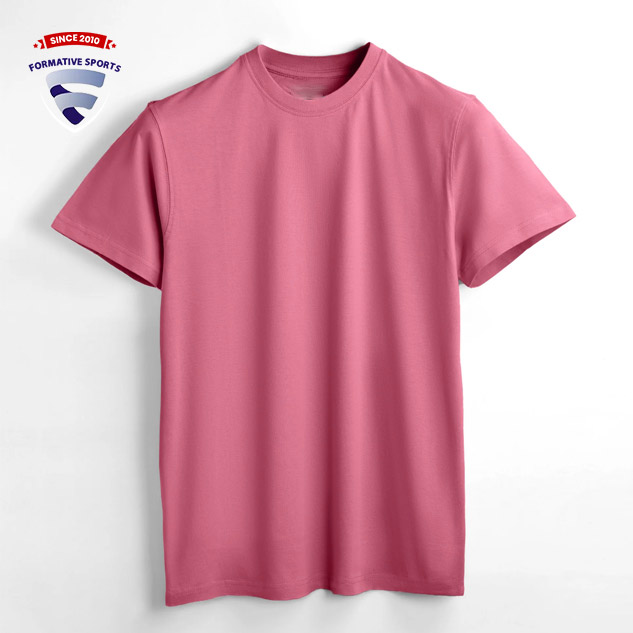
Consumer expectations around clothing quality have shifted considerably over the past several years. People are buying less and expecting more from each piece they invest in. The era of replacing a basic t-shirt every few months because it lost its shape or faded after a handful of washes is losing its appeal to a growing segment of buyers who want garments that earn a permanent place in their wardrobe. The question of whether T-Shirts Manufacturers in USA, like Formative Sports, can genuinely meet those expectations is not rhetorical. The answer is yes, and manufacturers delivering on that standard are doing so through specific, measurable decisions that are evident in how a garment feels, fits, and holds up across years of regular use.
Quality is one of those words that is frequently used in product descriptions without always having a specific meaning. In the context of a t-shirt, today's consumer tends to mean several concrete things simultaneously. They mean a fabric that feels substantial and comfortable against the skin rather than thin and disposable. They mean a fit that holds its shape after washing rather than stretching in some directions and shrinking in others. They mean colour that stays true across a full season of regular laundering rather than fading into something muted and tired within the first month. These are not unreasonable expectations.
Quality in a t-shirt is not an abstract concept. It is the outcome of specific choices made during fabric sourcing, pattern engineering, and construction that either support the garment's performance across its useful life or undermine it. Serious T-Shirts Manufacturers in USA make these decisions with quality as the primary criterion rather than cost minimisation. The decisions that matter most include fabric weight and composition, which together determine drape, durability, and how the garment feels against the skin across different temperatures. Ring-spun cotton produces a softer, stronger yarn than open-end spun alternatives, and the difference is immediately perceptible in the hand.
The American consumer market for quality t-shirts spans a genuinely wide range of buyer profiles and expectations, and the manufacturers serving it well have developed production capabilities that address that breadth without compromising standards at any point. Here is where domestic manufacturing is delivering the most consistent quality across different buyer segments:
The customisation conversation that happens with a quality-focused domestic manufacturer is fundamentally different from the one that happens with a supplier whose primary selling point is low minimum order quantities and fast turnaround. Experienced Custom Tshirts Manufacturers in USA bring fabric knowledge, fit expertise, and branding application precision to the customisation process that allows brands to translate their creative vision into finished garments with accuracy that builds genuine customer confidence. A custom t-shirt that fits exactly as the brand intended, in precisely the colour the design specified, and constructed to a standard that holds across the customer's regular washing routine is a product that does the brand's reputation building quietly and consistently with every wearing.
The construction discipline developed through polo shirt manufacturing transfers meaningfully into t-shirt quality when the same production standards are applied consistently across a manufacturer's full range. Skilled Polo Shirt Manufacturers in USA deal with collar precision, placket construction, and fabric performance requirements that demand a higher level of construction accuracy than basic t-shirt production technically requires. Manufacturers who carry those standards into their t-shirt range produce garments with seam consistency, fabric handling precision, and finishing quality that buyers notice even when they cannot explicitly identify.
The short answer to whether American t-shirt manufacturing can deliver what today's consumers expect is that the best of it already does, and has been doing so consistently for the brands and buyers who found the right manufacturing relationships and invested in them. The longer answer is that quality at this level requires choosing manufacturers who have made the same commitments to standards that the consumer is implicitly asking for when they decide to buy less and expect more.