
- An
 9001:2015 Certified Company
 - +92-333-2504174
 Rahim.ceo

- Home
- About Us
- Sports Uniforms
- Sportswear
- Sporting Goods
- Contact
9001:2015 Certified Company Rahim.ceo 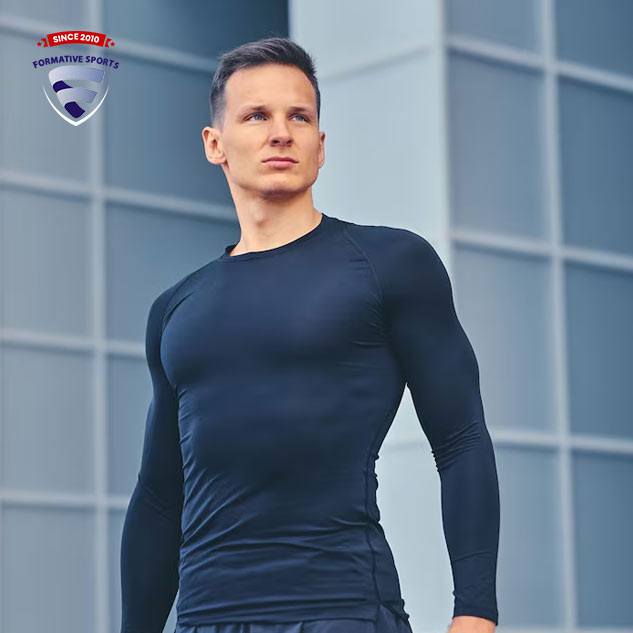
Talent alone is not enough in the high-stakes world of modern sports. Today, the "one-percenters," those tiny margins that separate a podium finish from a forgotten result, are increasingly found in the fibers an athlete wears. Sportswear Manufacturers in USA, like Formative Sports, have moved beyond simply being garment suppliers; they’ve transformed into performance labs where science and sweat intersect. While the global market frequently pursues "fast fashion" trends, British manufacturers are focusing on a more rigorous approach. They are blending biomechanical data with advanced textile chemistry to create kits that don't just look the part, they actively assist the body in maintaining its peak.
The first thing you notice about elite-level UK gear is the complexity of the fabric. We’ve moved far beyond simple moisture-wicking. Today’s Sportswear Manufacturers in UK are developing "intelligent" textiles that react to the athlete's state. For instance, many British brands now use localized "heat-mapping" to determine where an athlete sweats most. They then use laser-cut ventilation and variable-density weaves to ensure that heat is dumped exactly where it's needed most.
The standout trait of UK production is its refusal to design in a vacuum. Manufacturers here tend to work in a loop with physiotherapists and pro-tier coaches. They aren't just looking at how a shirt looks on a mannequin; they are looking at how a shoulder joint rotates during a 90mph serve or how a rugby player’s torso twists during a scrum. This leads to a "pre-shaped" design philosophy. Instead of a flat garment, the clothes are cut to follow the body’s natural athletic posture. It feels like a second skin because it is mapped to the human form in motion.
We are entering an era where technology is woven into the thread, not just clipped onto a waistband. Sportswear Manufacturers in Australia are currently experimenting with bioceramic-infused fabrics. These materials absorb the body’s far-infrared energy and reflect it back into the muscles, purportedly improving blood flow and oxygenation while the athlete is still competing. It’s a subtle, almost invisible advantage. Unlike bulky wearables, these "smart" fabrics don’t add weight or restrict movement. They offer a silent boost to recovery and endurance that stays active for as long as the shirt is on.
For years, the industry believed you couldn't have elite durability and sustainability at the same time. UK manufacturers are debunking that myth daily. They are leading the charge in using regenerated nylons (like Econyl) and recycled polyesters that are actually stronger than their virgin counterparts. Elite teams now demand more than just a fast kit; they want a responsible one. By utilizing low-impact dyeing processes and water-saving technologies, British factories are proving that ethical manufacturing can survive the rigors of professional sport without a drop in quality.
One of the most impressive feats of UK sportswear is the move toward sport-specific engineering. Sportswear Manufacturers in Canada are now offering tailored fabric weights and aerodynamic "trip-strips" that have small textures on the fabric that break air resistance, tailored specifically for the speeds of different disciplines.
The UK’s sportswear sector is winning because it treats the athlete as a high-precision machine. By focusing on the intersection of human biology and material science, they aren't just making uniforms; they're building a competitive edge. As we look toward the 2026 season and beyond, the gear being developed in these UK labs will likely be the silent partner in the next generation of world records.